
Our technology
What is Anodising?
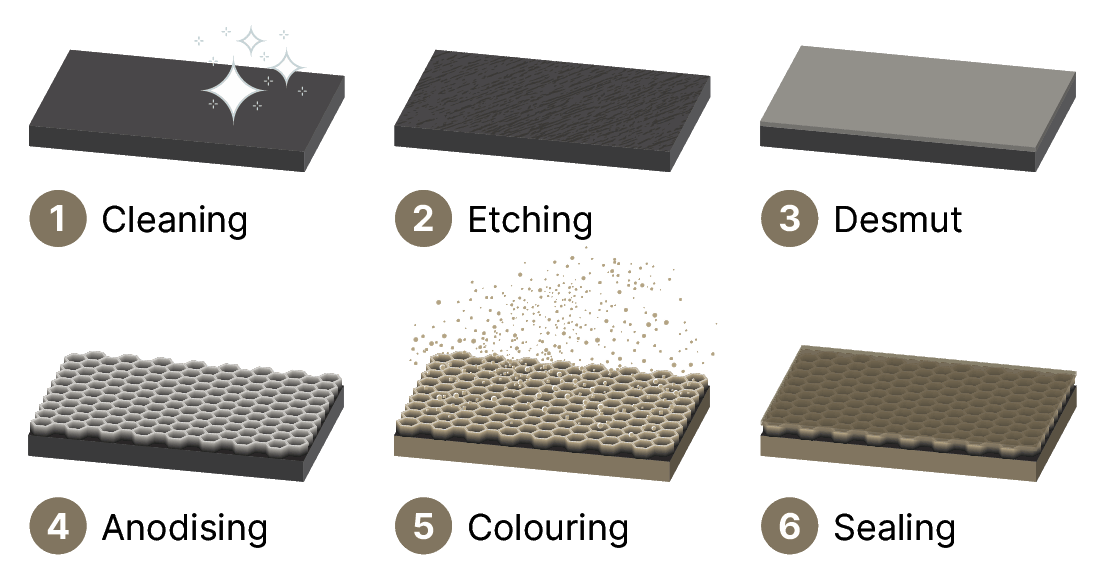
Anodising is an electrochemical process that strengthens and protects aluminium by forming a controlled oxide layer on its surface. Unlike paint or powder coating, this protective layer becomes part of the aluminium itself, meaning it won’t peel, flake or chip.
The result is a harder, more durable finish that enhances the natural aesthetic of aluminium while improving corrosion resistance and long-term performance. Colour can also be added during the process, while still retaining the metallic character of the material.
Colour options
FINEX offers a carefully curated range of popular architectural colours in a matt or ‘frost’ finish as standard, though traditional anodising is also available.
There are several colour and thickness options:
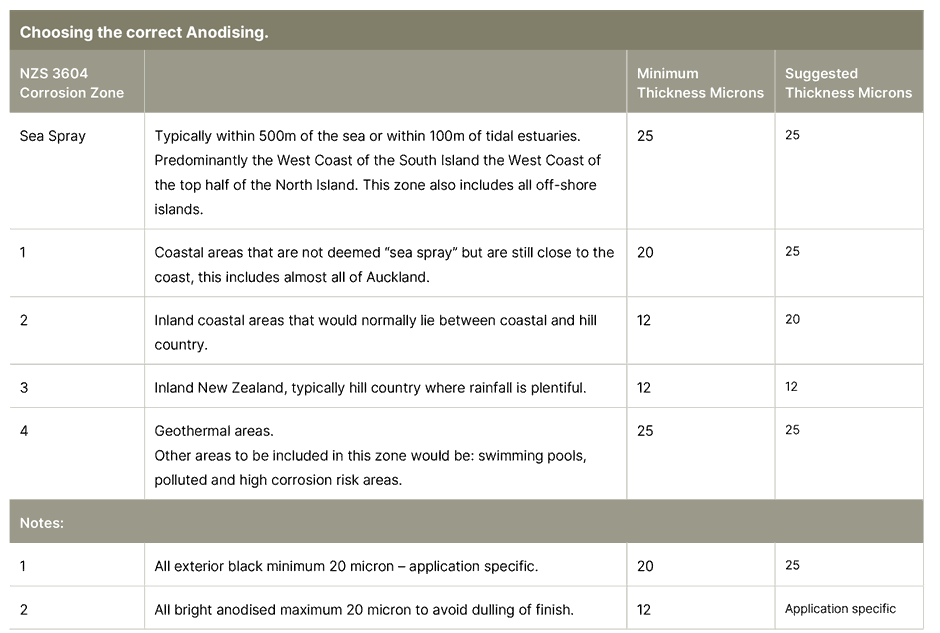
- Silver, in 12, 20 and 25 microns
- Bronze in light, medium or dark, 12, 20 and 25 microns
- Black and Champagne in 20 & 25 microns only
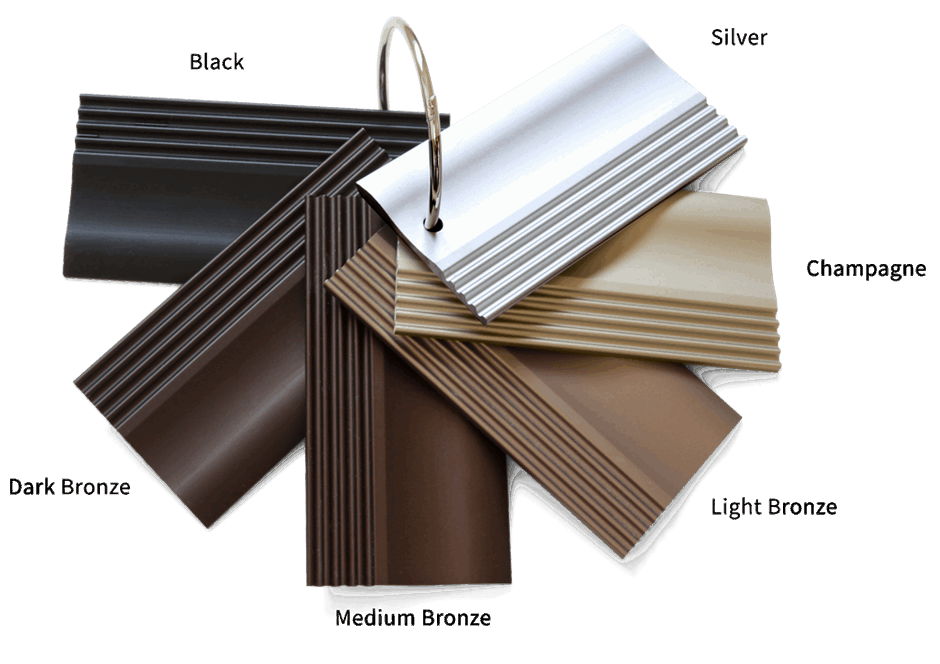
When judging colour consistency and integrity of the anodised finish, the accepted industry standard is inspection from a distance of two metres. Some variability of colour can occur and is part of the anodising process.
Anodised finishes change according to the angle at which they are viewed, talk to us about an Anodised colour swatch to view in natural light.Advanced warranty
Anodising is designed to improve resistance to chemicals and mortar-based products, making it ideal for demanding construction environments and long-term architectural performance.
Warranty Options:
-
25 micron anodising – 20-year warranty
-
20 micron anodising – 15-year warranty
-
12 micron anodising – 10-year warranty
Making the right choice
Frequently asked questions
Why should I choose anodising?
Anodising doesn’t just improve the appearance of aluminium - it strengthens and protects the surface at a structural level. The anodising process creates a durable oxide layer that becomes part of the aluminium itself, rather than sitting on top like paint. This makes it highly resistant to corrosion, weathering, fading, and everyday wear, even in harsh coastal or high-UV environments. It’s also a low-maintenance finish that retains its colour and appearance for years without peeling or flaking.
What items can be anodised?
Most aluminium parts can be anodised, from small custom pieces to large industrial components. If you’re unsure, just send us a photo and we’ll check for you.
Do I need to prepare my parts before sending them?
Please remove any stickers, oils or grease, and steel components or inserts.
Can you anodise welded or mixed‑metal items?
Aluminium welds can be anodised, but the colour may look slightly different from the rest of the part. Items with steel or brass sections cannot be anodised. We recommend using welding rod 5356 when welding aluminum for anodising.
Can the entire piece be anodised?
As with any process, we need a secure way to clamp the workpiece. For extrusions, please allow an additional 50mm at each end for clamping. For custom materials, we’ll work with you to minimise marking and agree on the best clamping solution for your part.
Does anodising change the size of my part?
Anodising reduces a thin layer, so the size change is minimal. For tightly‑fitting parts, feel free to ask us for specific thickness details.
How do I clean and maintain my anodised aluminium?
Regular cleaning is important to maintain the appearance and durability of anodised aluminium, keeping it looking its best for years to come. Over time, dirt, moisture, and airborne contaminants can damage the anodised surface if left untreated. Depending on the surrounding environment, cleaning frequency may range from monthly to every six months, so long as you are removing build up grime without damaging the anodised finish. Wash surfaces with warm water and a mild soap solution. A soft fibre brush can be used to loosen stubborn dirt. Avoid abrasive materials such as sandpaper, steel wool, or harsh acidic or alkaline cleaners, as these can damage the coating. For tougher marks, a mild abrasive such as pumice powder with water may occasionally be used. Always rinse thoroughly with clean water afterwards, especially around joints and crevices. Greasy deposits can be removed using a soft cloth lightly dampened with white spirit. Once cleaned, the surface may be protected with a quality wax polish. Avoid using emulsion cleaners or proprietary chemical products unless approved by specialists in anodised aluminium care.
What is the max size of aluminium?
FINEX can cater from the small jobs to the large facades with tank sizes being 7000L x 1750D x 600W.
Will anodising hide scratches or marks?
No, anodising won’t hide existing scratches or dents. Since it enhances the surface, imperfections may still be visible.
How long does the anodising process take?
Our typical turnaround time is 10 days. If you need something urgent, let us know and we may be able to fast‑track it.
Our markets
FINEX offer anodising to a wide range of businesses in the glazing, marine, and both commercial and residential and construction sectors
